The Confidence Boost of Dental Implants in Bakersfield CA
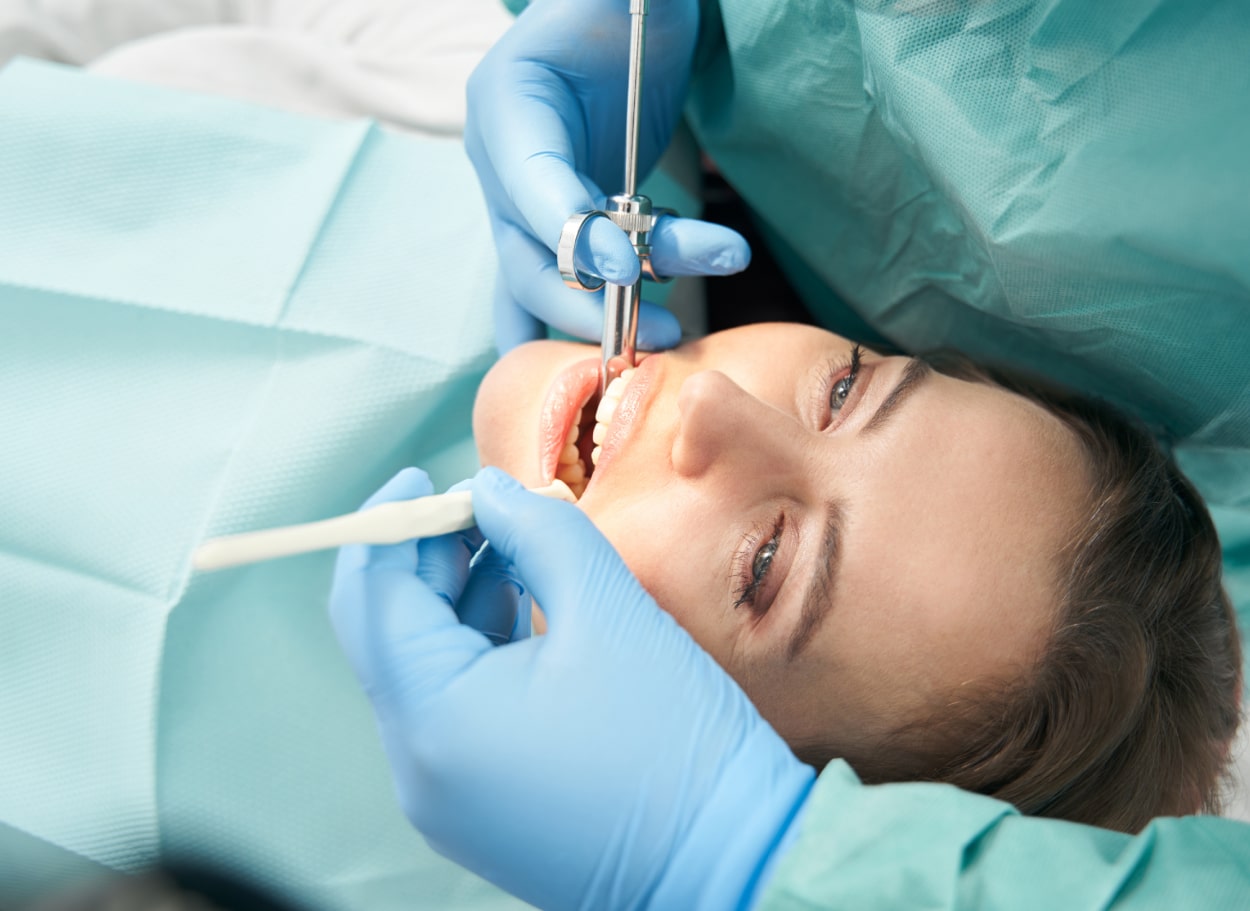
A missing tooth changes more than a smile. It can alter the way a person speaks, the foods they choose, how often they laugh in public, and even the way they carry themselves in a room. People tend to think of tooth loss as a cosmetic issue first, but that is only part of the story. In practice, confidence and function are deeply tied together. When chewing feels awkward, when a denture shifts at the wrong moment, or when a gap is visible every time someone looks in the mirror, self-consciousness usually follows.
That is why the conversation around dental implants in Bakersfield CA often goes beyond appearance. Yes, implants can create a natural-looking smile. More importantly, they can help people feel steady, capable, and comfortable again in daily life. Confidence is rarely built by appearance alone. It grows when something looks right and works right at the same time.
Bakersfield has its own pace and personality. People here work in professional offices, healthcare settings, schools, agriculture, construction, logistics, and countless other fields where face-to-face interactions matter. For many adults, confidence is not about vanity. It is about being able to speak clearly in a meeting, enjoy dinner with family, or stop worrying that others notice the space in their smile before they hear what they have to say.
Why missing teeth affect confidence so deeply
Most people adapt quickly after losing a tooth, at least on the surface. They learn to chew on one side. They smile with their lips closed. They avoid photos or angle their face in a familiar way. Over time, these adjustments can become so routine that they seem normal. Yet the mental effort never fully disappears.
There is a quiet strain that comes with managing a visible gap or an unstable replacement tooth. A patient may stop ordering certain foods at restaurants because crunchy bread, steak, or raw vegetables feel too difficult. Another may keep a hand near their mouth when laughing. Someone with a front tooth missing often reports a very specific kind of self-awareness, the sense that every conversation starts with an apology, even if no words are spoken.
This is one reason implants can have such a strong emotional effect. They do not simply fill a space. They replace structure. They restore predictability. When the tooth feels secure, many of the small protective habits begin to fall away.
The difference between replacing a tooth and restoring normal life
There are several ways to replace missing teeth, and each has a place. A removable partial denture may be the right short-term solution for one person. A traditional bridge can work well in certain cases, especially when nearby teeth already need crowns. Dental implants, however, occupy a unique category because they replace the missing tooth root as well as the visible crown.
That distinction matters. Bone in the jaw needs stimulation. When a tooth root is lost, the bone in that area can gradually shrink. Over the years, this change affects support, gum contours, and facial shape. An implant placed in the jawbone can help preserve that foundation. From a confidence standpoint, this often means the result feels more natural, not just in appearance but in daily use.
Patients frequently describe the goal in simple terms. They do not want a tooth that looks fine in photos but feels foreign while eating. They want something that lets them forget about the problem. That is where implants often stand apart. When treatment is planned carefully and the implant integrates well, the restored tooth can feel remarkably close to a natural one.
What confidence looks like in real life
Confidence after implant treatment does not always arrive in one dramatic moment. Sometimes it shows up in small, ordinary scenes.
A man who had avoided smiling in work headshots agrees to update his professional photo without hesitation. A woman who wore a removable partial for years stops excusing herself to the restroom to check if it shifted after lunch. A grandparent bites into an apple with a grandchild for the first time in years. These details may seem minor from the outside, but they often carry real emotional weight.
People who seek dental implants in Bakersfield CA are often balancing practical concerns with personal ones. They may be preparing for a wedding, reentering the dating world, interviewing for a new job, or simply growing tired of managing an issue that chips away at self-esteem. Some are highly expressive and feel bothered by any visible imperfection. Others are stoic and say appearance does not matter, right up until they admit they have not smiled openly in years. Both reactions are common.
What tends to surprise patients is how much relief they feel once the uncertainty is gone. They are no longer thinking ahead to every meal, every conversation, every photograph. The absence of worry is, in many ways, the confidence boost.
Why implants often feel more secure than other options
The strongest psychological advantage of an implant is stability. Removable appliances can be helpful, but they are still removable. They require cleaning outside the mouth, may depend on clasps or suction, and can create a lingering awareness that the tooth replacement is separate from the body. An implant-supported crown is different. Once healed and restored, it remains in place and functions like a permanent part of the mouth.
That fixed quality changes behavior. Speech often feels more natural because there is no appliance shifting against the tongue. Chewing can become more balanced. Social settings become easier because the fear of movement or slippage fades. For someone who has spent years compensating, that stability can be hard to overstate.
This does not mean implants are automatic or effortless. They require careful diagnosis, healing time, and a financial commitment. Not every patient is a candidate on the same timeline. Confidence should never be sold as magic. It is usually the result of well-executed clinical work paired with realistic expectations.
The Bakersfield factor: local lifestyle, habits, and expectations
Treatment decisions are never made in a vacuum. Bakersfield residents often bring a practical mindset to dental care. They want to know how long something will last, how many appointments it will take, whether they will miss work, and what recovery actually feels like. Those are reasonable questions.
The local climate and lifestyle can shape habits too. People who spend long days outdoors, work physically demanding jobs, or keep irregular schedules may have little patience for a solution that requires constant adjustment. A fixed restoration can appeal to patients who want simplicity once treatment is complete.
There is also a social element. Bakersfield is large enough to offer advanced care, yet small enough that personal reputation, community events, and everyday interactions still matter. Confidence is not an abstract wellness concept here. It is tied to church gatherings, business meetings, school functions, family celebrations, and ordinary encounters at the grocery store. Feeling at ease in those moments has value.
What the implant process usually involves
A successful implant case starts long before the implant itself is placed. The dentist or specialist first evaluates gum health, bone volume, bite forces, medical history, and the position of nearby teeth. In many modern practices, three-dimensional imaging helps determine whether the site can support an implant safely and predictably.
The general flow often includes the following stages:
- Consultation, exam, and imaging to assess bone, gums, bite, and goals.
- Treatment planning, which may include extraction, grafting, or timing decisions.
- Implant placement, followed by a healing period while the bone integrates with the implant.
- Placement of the connector piece and custom crown after healing is complete.
- Long-term maintenance through home care and regular dental visits.
For a straightforward single-tooth case, treatment can move efficiently. For someone with bone loss, gum disease, or multiple missing teeth, the timeline can be longer. That longer path is not necessarily a bad sign. In fact, slower, staged care often leads to a stronger result. One of the most important professional judgments in implant dentistry is knowing when not to rush.
Bone loss, gum health, and the cases that need more planning
Not every missing tooth site is ready for an implant immediately. If the tooth has been gone for years, the jawbone may have thinned. If gum disease is active, placing an implant before controlling inflammation can jeopardize the outcome. Smokers, patients with uncontrolled diabetes, and those with heavy grinding habits may need additional planning or medical coordination.
This is where honest conversations matter. A good implant candidate is not just someone who wants the procedure. It is someone whose mouth and health can support it, or can be brought to that point with proper preparation.
Sometimes that means bone grafting. The term sounds intimidating, but in practice it is a common way to rebuild support in an area where the bone has receded. Healing https://www.google.com/search?sca_esv=cb596a67502e2f5f&rlz=1C1CHBD_enPH1076PH1076&sxsrf=ANbL-n5XOVf7poWZEwttpvY5SD27xrIqrA:1780385731623&kgmid=/g/1tdmvyhz&q=Smyle+Dental+Bakersfield&shem=epsdc,rimspwouoe&shndl=30&source=sh/x/loc/uni/m1/1&kgs=00021d60a9f9e91a&utm_source=epsdc,rimspwouoe,sh/x/loc/uni/m1/1 adds time, yet it can dramatically improve the implant's long-term stability and esthetic result. Especially in the front of the mouth, that extra preparation may be what separates an acceptable result from a truly natural-looking one.
Gum contours also deserve more attention than most patients realize. Confidence comes not only from having a tooth in the space, but from the tooth emerging through healthy tissue in a way that matches the smile around it. Tiny asymmetries in gum line or crown shape may not matter to everyone, but they can matter a great deal in visible areas.
The emotional side of the waiting period
One of the hardest parts of implant treatment is that it asks patients to be patient. Modern dentistry can do remarkable things, but biology still keeps the schedule. Bone needs time to fuse with the implant. Grafted areas need time to mature. Soft tissue needs time to settle.
For someone eager to move on from tooth loss, that delay can feel frustrating. Yet there is a practical benefit to understanding the process upfront. Patients who know what to expect are more likely to stay engaged and less likely to panic over normal healing changes.
The waiting period can also be emotionally interesting. Once people commit to treatment, they often feel a lift in confidence before the final crown is even delivered. There is reassurance in knowing the problem is being addressed properly. That forward momentum matters. It changes the story from "I have to live with this" to "I am actively fixing this."
Cost, value, and the reality of long-term thinking
Cost is a legitimate concern, and it should be discussed directly. Dental implants usually involve a higher upfront investment than removable options or some bridgework. The total fee may include imaging, extraction, grafting, surgical placement, the abutment, and the final crown. Pricing varies by case complexity, provider experience, and materials used.
The value question is more nuanced than the initial number. A lower-cost option may solve an immediate problem, but if it is less comfortable, less stable, or more likely to need frequent remakes, the long-term equation changes. That does not mean implants are always the correct financial choice. For some patients, they are not. It does mean the comparison should be fair and complete.
When patients weigh treatment, these are often the deciding factors:
- how the replacement will feel during meals and conversation
- whether nearby healthy teeth must be altered
- expected maintenance over the next several years
- how important a fixed, natural-looking result is to daily confidence
- whether the timing and budget fit current life demands
Those questions tend to produce better decisions than simply asking which option is cheapest today.
A single tooth, multiple teeth, and full-arch treatment
Confidence concerns can look very different depending on how many teeth are missing. A single implant in the front of the mouth often has a strong cosmetic and social impact. A single implant in the back may seem less visible, but it can matter just as much because of chewing comfort and bite balance.
When several teeth are missing, implants may support individual crowns, a bridge, or even a full-arch prosthesis. Patients who struggle with loose lower dentures often experience a dramatic quality-of-life improvement when implants are used for support. Eating can become easier. Speech can sharpen. The constant movement of the appliance may stop being the center of attention.
That said, bigger cases require more planning, more financial discussion, and more precision with maintenance. Full-arch work can be transformative, but it is not casual dentistry. The confidence payoff can be tremendous, though so is the need for excellent follow-through.
What makes an implant look natural
People often focus on the crown, the visible tooth-shaped part, but natural appearance depends on several factors working together. The implant position must be correct. The surrounding bone has to support the tissue. The gum line should frame the tooth properly. The crown color and shape need to match the neighboring teeth. Even the way light reflects off the surface matters.
A common mistake is assuming that if a crown is white and straight, it will look good. Real teeth are more complex than that. They have subtle translucency, contour, and variation. In esthetic areas, the best results usually come from careful coordination between the surgical and restorative sides of treatment.
From a confidence perspective, the most successful implant is often the one people do not notice. Friends see a relaxed smile, not a repaired one.
Living with dental implants after treatment
Once the final restoration is in place, many patients expect the implant to be maintenance-free forever. That is not realistic. Implants do not get cavities, but the tissues around them can still become inflamed if plaque accumulates. Bite forces can damage a crown if grinding is severe. Nightguards, professional cleanings, and solid home care still matter.
Daily maintenance is straightforward, but it matters:
- brush thoroughly along the gum line
- clean between teeth and around the implant with the tools your dentist recommends
- keep regular recall visits so the bite and tissue health can be monitored
- wear a nightguard if you clench or grind
- report loosening, soreness, or changes early rather than waiting
Patients who treat implants like permanent teeth, not indestructible hardware, tend to do best over time.
Confidence is personal, not cosmetic fluff
There is sometimes a tendency to dismiss dental confidence as superficial. That misses the point. Confidence is tied to function, identity, and social ease. It affects whether a person participates fully in meals, conversations, and public life. It can influence job performance, relationships, and mental comfort in surprisingly practical ways.
A person who has hidden their smile for years usually does not need a lecture on self-acceptance. They need a thoughtful evaluation, a realistic treatment plan, and a restoration that lets them stop thinking about the missing tooth. When that happens, the emotional shift can be substantial. Not because vanity won, but because normalcy returned.
For residents exploring dental implants in Bakersfield CA, the best first step is not chasing the fastest or flashiest promise. It is finding a clinician who evaluates the whole picture, bone, gums, bite, health history, appearance goals, and budget, then explains the trade-offs clearly. Good implant dentistry is part surgical discipline, part restorative craftsmanship, and part expectation management.
When those pieces come together, the confidence boost is real. It shows up in a stronger bite, a more relaxed smile, and a version of daily life that feels easier again. That is the real appeal of implants. They do not just replace teeth. They help people feel like themselves.
Smyle Dental Bakersfield
2016 E St, Bakersfield, CA 93301, United States
+16614939040
FAQ About Dental Implants Bakersfield CA
What is the downside of a dental implant?
The main downsides of dental implants involve high financial costs, surgical risks, a lengthy healing process, and the potential for long-term complications.
How much does a full set of implants usually cost?
A full set of dental implants (covering both the upper and lower arches) typically ranges from $6,000 to $90,000+, depending heavily on the type of treatment, materials used, and whether the teeth are fixed or removable.
Can I have all my teeth pulled and get implants?
Yes, you can have all your teeth pulled and replaced with dental implants. Instead of placing a separate implant for every single tooth (which is costly and time-consuming), dentists typically use full-arch systems.